Pain can make even simple daily activities difficult. When pain appears, many people reach for painkillers because they can provide relatively quick relief. But when pain keeps returning, an important question arises:
Are you only managing the pain, or are you addressing the factors contributing to it?
This is where physiotherapy can play an important role.
The choice between physiotherapy and pain medication is not always an either-or decision. Depending on the condition, medications may have a role in short-term symptom management, while physiotherapy can help improve movement, strength, function, and recovery.
What Do Painkillers Actually Do?
Painkillers, also called analgesics, are medications used to reduce pain. Different medications work in different ways, and some can also reduce inflammation.
They may be useful for short-term pain relief, particularly when pain makes it difficult to sleep, move, or perform everyday activities.
However, pain relief does not necessarily mean that the underlying cause of the problem has been resolved.
For example, if poor movement patterns, muscle weakness, joint stiffness, or an injury are contributing to your symptoms, reducing pain alone may not address those factors.
What Does Physiotherapy Do?
Physiotherapy takes a movement- and function-focused approach.
A physiotherapist can assess factors such as:
- Joint mobility
- Muscle strength
- Flexibility
- Posture
- Balance
- Movement patterns
- Physical activity levels
- Functional limitations
Based on the assessment, treatment may include therapeutic exercises, mobility work, strengthening, manual therapy, education, and guidance on modifying activities when appropriate.
The aim is not simply to make you feel better temporarily, but to help you move and function better over time.
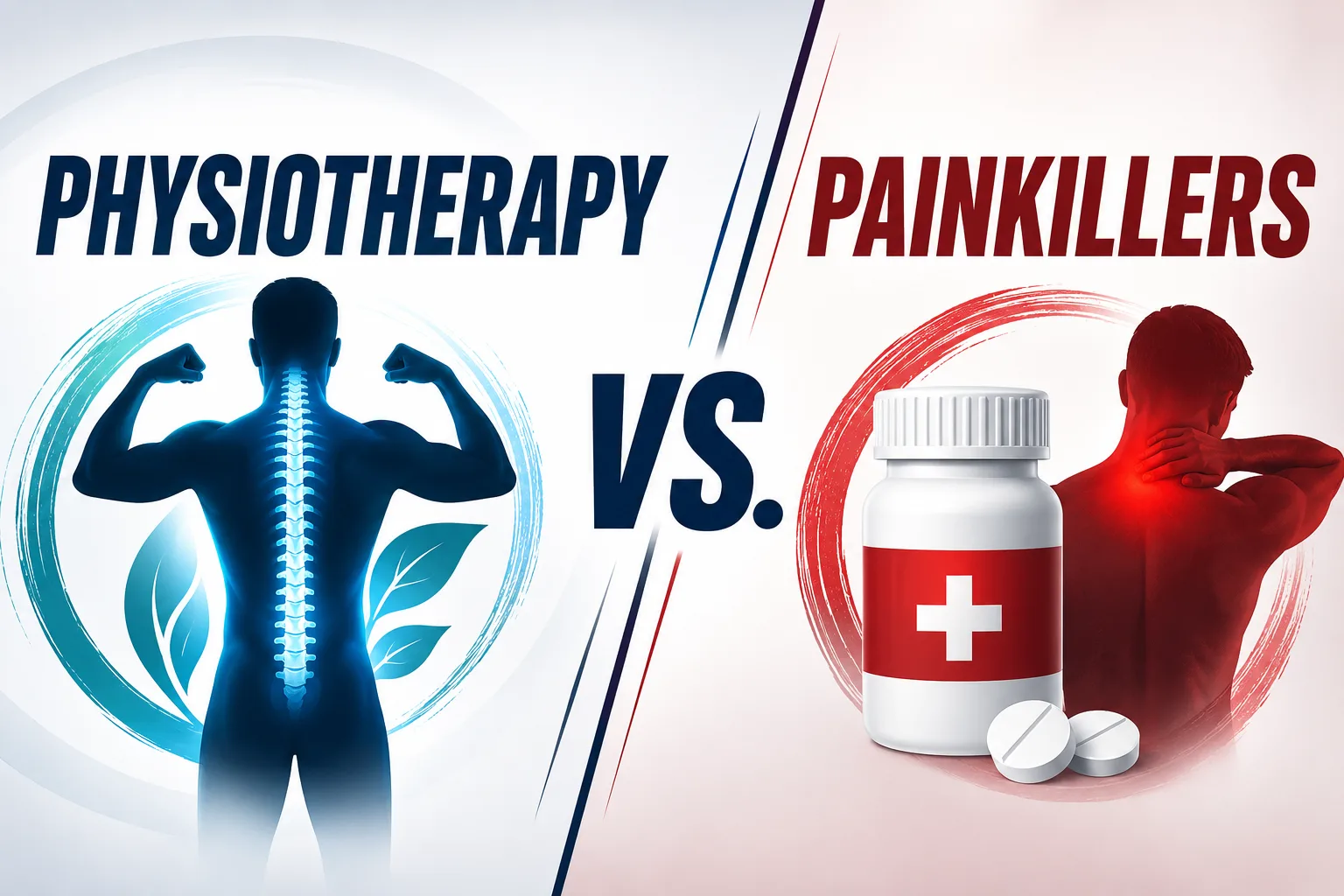
Physiotherapy vs. Painkillers: The Key Difference
The biggest difference is often the goal.
Painkillers: Primarily focus on reducing the sensation of pain.
Physiotherapy: Focuses on improving physical function and addressing contributing movement or musculoskeletal factors.
This does not mean pain medication is ineffective or unnecessary. In some situations, medication can be an appropriate part of care.
Similarly, physiotherapy is not a universal solution for every type of pain.
The right approach depends on the cause, severity, duration, medical history, and individual circumstances.
Why Long-Term Recovery Requires More Than Pain Relief
Imagine someone experiencing recurring lower-back pain.
Taking medication may temporarily reduce the discomfort. But if the person continues to spend long hours sitting, has reduced strength, poor movement habits, or limited mobility, the contributing factors may remain.
A physiotherapist can assess the individual’s movement and develop an appropriate rehabilitation program.
This may involve gradually improving strength, mobility, physical capacity, and confidence with movement.
Over time, the focus can shift from simply asking:
“How do I stop the pain?”
to:
“How can I improve the way my body moves and functions?”
Can Physiotherapy and Medication Be Used Together?
Yes. They are not necessarily competing approaches.
Depending on the condition, a healthcare professional may recommend medication alongside physiotherapy or other forms of treatment.
For example, reducing pain may make it easier for someone to participate in rehabilitation exercises. As movement and function improve, the overall treatment plan can be reassessed by the appropriate healthcare professional.
Medication decisions should always be discussed with a qualified doctor or pharmacist, particularly when medication is being used regularly or for a prolonged period.
When Should You Consider Physiotherapy?
Physiotherapy may be worth considering if you experience:
- Persistent muscle or joint pain
- Repeated episodes of back or neck pain
- Stiffness affecting daily activities
- Reduced mobility
- Difficulty returning to exercise after an injury
- Sports-related injuries
- Muscle weakness
- Balance or movement difficulties
- Pain that keeps coming back
A professional assessment can help determine whether physiotherapy is appropriate for your particular situation.
The Goal Should Be Better Function, Not Just Less Pain
Pain is an important signal from your body, but it is only one part of the picture.
Long-term recovery often involves understanding why the problem developed, improving physical capacity, restoring movement, and gradually returning to normal activities.
Painkillers can have an important role in appropriate situations, but they should not automatically be viewed as the complete solution for ongoing musculoskeletal problems.
The Bottom Line
Pain relief and recovery are not always the same thing.
Medication may help manage symptoms, while physiotherapy can help address movement and functional factors that contribute to many musculoskeletal conditions.
The best approach is often an individualised one based on a proper assessment rather than choosing one treatment for everyone.
At Muscle Mechanic, the focus is on understanding your movement, identifying relevant physical limitations, and creating a personalised physiotherapy approach designed around your recovery goals.
Don’t just focus on getting through the pain. Focus on getting back to moving well.