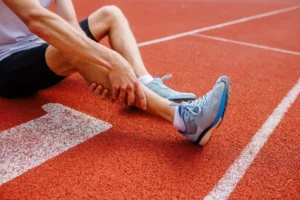

Whether you’re a professional athlete, a regular gym-goer, or someone who enjoys weekend sports, an injury can bring your routine to an unexpected stop.
A sprained ankle, pulled muscle, knee pain, or shoulder injury can leave you wondering:
“When can I start again?”
The answer isn’t always as simple as waiting until the pain disappears.
A safe return to activity involves restoring movement, rebuilding strength, improving control, and gradually preparing the body for the demands of your sport. This is where physiotherapy can become an important part of sports injury rehabilitation.
What Causes Sports Injuries?
Sports injuries can happen suddenly or develop gradually over time.
Common causes include:
- Sudden falls or collisions
- Twisting or awkward movements
- Muscle or ligament overload
- Repetitive movements
- Rapid increases in training intensity
- Poor movement technique
- Inadequate recovery
- Previous injuries
Some injuries occur during a single event, while others develop because the body is repeatedly exposed to more stress than it can currently tolerate.
Common sports-related problems include muscle strains, ligament sprains, tendon injuries, knee pain, ankle injuries, shoulder problems, and overuse injuries.
Why Is Returning Too Early a Problem?
One of the biggest mistakes after an injury is returning to full activity simply because the pain has improved.
Pain reduction is encouraging, but it doesn’t necessarily mean that your strength, mobility, coordination, or physical capacity have completely recovered.
For example, you may be able to walk comfortably after an ankle injury but still struggle with the balance and strength required for sprinting, jumping, or changing direction.
Feeling better is one milestone. Being ready for your sport is another.
How Can Physiotherapy Help?
1. Assessing the Injury and Your Movement
Physiotherapy begins with understanding how your body is currently functioning.
Depending on the injury, a physiotherapist may assess:
- Range of motion
- Muscle strength
- Joint mobility
- Balance
- Coordination
- Movement patterns
- Functional abilities
- Sport-specific requirements
This helps create a rehabilitation plan based on your individual needs rather than simply following a generic exercise routine.
2. Restoring Movement
After an injury, stiffness and reduced movement are common.
Appropriate mobility exercises and other physiotherapy techniques may help restore comfortable movement and prepare the body for progressive loading.
The goal is not simply to move farther—it is to develop controlled and useful movement.
3. Rebuilding Strength
Injuries and periods of reduced activity can lead to weakness.
Progressive strengthening is therefore an important part of rehabilitation.
Exercises can be adjusted according to your current ability and gradually progressed as your strength and tolerance improve.
4. Improving Balance and Control
Many sports require more than basic strength.
Running, jumping, landing, cutting, throwing, and changing direction all require coordination and control.
Rehabilitation may include balance and movement-control exercises to help prepare you for these demands.
5. Gradually Increasing Training Load
A return to sport shouldn’t usually be an immediate jump from rehabilitation exercises to full competition.
Instead, physical demands can be increased progressively.
For example:
Basic movement → Strength training → Running → Sport-specific drills → Full training → Competition
The exact progression depends on the injury, sport, individual recovery, and professional assessment.
Sport-Specific Rehabilitation Matters
Every sport places different demands on the body.
A football player may need to sprint, stop suddenly, jump, and change direction.
A tennis player may require repeated shoulder movement, rapid footwork, and rotational strength.
A runner may need to tolerate repeated impact over longer periods.
Because of these differences, rehabilitation should eventually prepare the body for the specific movements and demands of the activity you want to return to.
Physiotherapy Isn’t Just About the Injured Area
An injury may affect more than one part of the body.
For example, after an ankle injury, changes in walking or movement may influence how the knee, hip, or other areas are used.
This is why a broader assessment of movement and function can be valuable.
The goal is to help the body work as a connected system rather than focusing only on the location of pain.
How Can You Reduce the Risk of Future Injuries?
No training program can guarantee that injuries will never happen. However, several habits can support safer participation:
Increase Training Gradually
Avoid sudden increases in training volume or intensity.
Build Strength
Strong muscles help the body handle physical demands more effectively.
Prioritise Recovery
Rest, sleep, and appropriate recovery between demanding sessions are important parts of training.
Don’t Ignore Persistent Pain
Pain that repeatedly returns during activity deserves attention rather than being continuously pushed through.
Maintain Movement Quality
Technique, coordination, balance, and control can all be important depending on the sport.
When Should You See a Physiotherapist?
Consider professional assessment if you have:
- Persistent pain after sports activity
- Repeated injuries
- Reduced strength
- Restricted movement
- Swelling after an injury
- Difficulty returning to exercise
- Pain that affects your performance
- Uncertainty about whether you are ready to return
Some injuries may require medical evaluation, imaging, or other forms of treatment. A qualified healthcare professional can help determine the appropriate next step.
The Bottom Line
Returning to sport isn’t simply about waiting for pain to disappear.
It’s about rebuilding the strength, mobility, control, confidence, and physical capacity needed to handle your activity safely.
Physiotherapy can provide a structured and personalised approach to rehabilitation, helping you progress from basic movement toward the specific demands of your sport.
At Muscle Mechanic, the focus is on helping you understand your injury, improve your physical function, and work toward returning to the activities you enjoy.
Don’t just return to your sport. Return prepared.